The world of slurry pumping is not standing still. Mining is going deeper, processing more complex ores. Environmental regulations are tightening. Energy costs remain volatile. And the workforce operating and maintaining this equipment is changing, with fewer experienced mechanics available to troubleshoot complex failures. CNSME PUMP is actively developing the next generation of vertical slurry pumps to address these shifts. While some technologies remain in the prototype stage, others are already appearing in new models. Understanding these trends helps plant managers make informed decisions about when to upgrade and what to expect from pumps purchased today versus those that will be available in a few years. Let me walk through the most promising developments on the horizon for CNSME vertical slurry pumps.
Smart Sensors and Predictive Maintenance Integration
The most immediate trend is the integration of sensors that turn a dumb pump into a smart device. CNSME is equipping new vertical pumps with embedded temperature sensors in the bearing housing, vibration sensors on the motor mounting plate, and even acoustic sensors that listen to the impeller. These sensors feed data to a local controller or to a cloud-based monitoring platform. The system learns what normal operation looks like for your specific installation. When a bearing runs a few degrees hotter than usual, the system sends an alert. When vibration patterns suggest the impeller is out of balance, it schedules a service reminder. This is predictive maintenance, and it changes the game. Instead of changing parts on a fixed calendar schedule—often too early or too late—you change them when the pump actually needs it. Early adopters report reducing unplanned downtime by seventy percent and extending bearing life by fifty percent. The sensors add cost upfront, but they pay for themselves quickly in avoided failures and optimized maintenance intervals. For plants with lean maintenance staff, smart pumps are not a luxury; they are becoming a necessity.
 ### Advanced Wear Monitoring Through Impeller Position Tracking
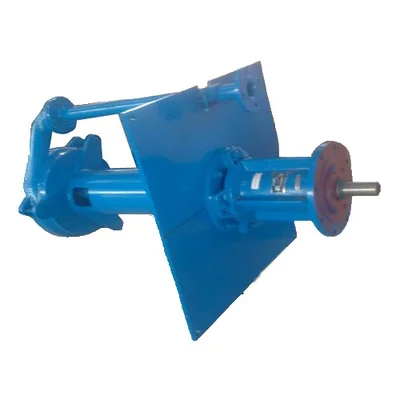
One specific sensor development deserves its own attention. CNSME is testing a non-contact magnetic sensor that tracks the exact axial position of the impeller relative to the volute liner in real time. As the impeller and liner wear, the gap between them increases. That gap is the single biggest factor affecting pump efficiency and recirculation wear. Currently, operators adjust the clearance on a schedule or when performance drops noticeably. The new sensor allows continuous monitoring. When the gap exceeds a preset threshold, the pump’s control system can automatically trigger an external clearance adjustment using a small electric actuator. The pump adjusts itself, restoring optimal clearance without any human intervention. This closed-loop wear compensation is a significant leap forward. It keeps the pump operating at peak efficiency throughout its life, not just in the weeks after a manual adjustment. For remote or unattended pump stations, self-adjusting clearance is transformative. Beta testers in Australian mines report that self-adjusting pumps maintained new-pump efficiency for over a year, compared to three months for manually adjusted pumps.
Energy Recovery and Variable Frequency Drive Optimization
Energy efficiency is a perennial trend, but CNSME is approaching it from a new angle. Variable frequency drives have been used to control pump speed for years, but they are often programmed with simple linear curves that do not account for slurry properties. CNSME is developing VFD control algorithms that use real-time data from the pump’s sensors to optimize speed for minimum energy consumption at the required flow. The algorithm accounts for slurry density, which changes as solids settle or are added. It accounts for wear, adjusting speed to maintain flow as clearance increases. And it accounts for viscosity, which can vary with temperature or solids concentration. The result is a pump that uses exactly the energy needed to move the required amount of slurry—no more, no less. In variable-duty applications such as dewatering or batch transfer, these intelligent VFDs can reduce energy consumption by fifteen to twenty-five percent compared to fixed-speed operation or simple VFD curves. For a large mine with dozens of pumps, the annual energy savings can reach seven figures.
Modular and Reconfigurable Pump Architectures
Another trend is modularity that goes beyond today’s replaceable liners. Future CNSME vertical pumps will be built from a small set of standardized modules: a bearing housing, a shaft section, a casing module, and a discharge elbow. These modules will bolt together with standardized interfaces. A pump that is currently configured as a cantilever design for a shallow sump could be reconfigured as a bearing pump for a deep sump by adding intermediate shaft sections and bearing modules. A pump with a high-chrome wet end could be converted to rubber lining by replacing the casing module and impeller, while reusing the shaft and bearing housing. This reconfigurability reduces the number of spare pumps a plant needs to stock. Instead of a spare for every duty, you stock modules and assemble the pump you need when you need it. It also simplifies upgrades. When a better impeller design becomes available, you replace only the impeller module, not the whole pump. CNSME is still refining the interface designs to ensure leak-free operation after multiple reconfigurations, but the engineering challenges are solvable. Expect to see modular vertical pumps on the market within three to five years.
 ### Automated Commissioning and Self-Tuning
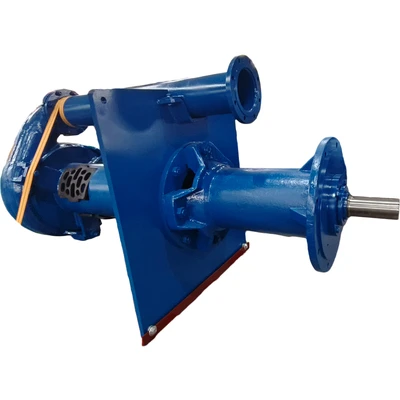
The declining availability of experienced pump technicians is a real problem. A vertical slurry pump ↗ that arrives at a plant and requires hours of skilled labor to commission—aligning, setting clearances, wiring sensors, programming VFD parameters—may sit in a crate for weeks waiting for the right person. CNSME is working toward automated commissioning. Future pumps will include self-alignment features. The motor mount will have built-in jacking bolts and digital levels. The pump will connect to a commissioning tablet or phone via Bluetooth. An app will guide the installer step by step, using the pump’s own sensors to verify each step. The pump will measure its own shaft runout, set its own clearance using the automatic adjuster, and configure its VFD parameters based on the motor nameplate data. The installer’s role becomes following the app’s instructions and pressing “confirm.” This self-tuning capability dramatically reduces the skill level required for a successful installation. For plants in remote locations or regions with a shrinking industrial workforce, automated commissioning is not just convenient—it is essential for keeping operations running.
Sustainable Material Alternatives and Lifecycle Design
Finally, sustainability is driving material innovation. The high-chrome alloys used in slurry pumps are energy-intensive to produce. Their main components—chromium and iron—require mining and smelting. CNSME is researching alternative materials with lower environmental footprints. One promising avenue is ceramic-metal composites that use less virgin metal. Another is recycled high-chrome alloy produced from ground-up wear parts returned by customers. CNSME has launched a pilot program where worn impellers and liners are collected, cleaned, and remelted into new components. The recycled alloy performs nearly identically to virgin material, with about half the carbon footprint. The company is also designing pumps for easier disassembly at end of life, with components labeled by material type to simplify recycling. These efforts may not directly affect pump performance, but they matter to customers with corporate sustainability commitments. A pump that handles slurry effectively while minimizing environmental impact is increasingly the preferred choice for responsible operators. CNSME’s investment in these trends ensures that their vertical slurry pumps will remain competitive not just in price and performance, but in the broader context of industrial sustainability.