Not every coil coater operates in a sprawling greenfield facility with unlimited floor space. Some producers are squeezing a new line into an existing building where every meter counts, while others are planning a high-capacity installation designed to serve demanding export markets. These two scenarios could hardly look more different, yet both need the same core outcome: reliable, consistent prepainted aluminum produced at a sensible cost. HiTo Engineering has structured its aluminum coil coating line ↗ offering around this reality, treating customization not as an optional extra but as the starting point of every project conversation. The result is equipment that adapts to the plant rather than forcing the plant to adapt to the equipment.
Why a Standard Line Rarely Fits a Real Plant
It is tempting to imagine that a proven standard design can simply be dropped into any building and switched on. In practice, the constraints of the site almost always shape the solution. Ceiling heights affect oven configuration and crane access. Column spacing influences accumulator length and coil handling routes. Available utility capacity may rule out certain heating methods or demand particular efficiency measures. HiTo's engineering team begins each project by surveying these constraints carefully, because a line designed around the actual building will always commission faster and operate more smoothly than one modified after the fact.
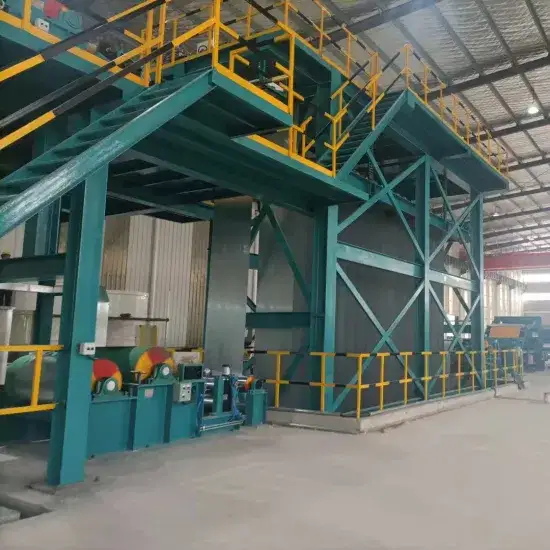 ## Designing for Facilities Where Space Is Tight
Compact plants present a particular engineering challenge, because the coating line is inherently a long, linear process. HiTo addresses this through layout ingenuity rather than simply shortening equipment and accepting reduced capability. Accumulators can be configured vertically or arranged to fold the line back on itself, allowing strip storage capacity to be maintained within a smaller footprint. Entry and exit sections can be positioned to suit the building's geometry, and oven configurations can be selected to fit available headroom. The objective is to preserve full process capability, including coating quality and line speed, while respecting the physical limits of the site.
Scaling Up for High-Capacity Production Demands
At the other end of the spectrum, high-capacity plants need equipment built to sustain heavy duty cycles without sacrificing quality. HiTo designs these lines with generously sized accumulators that allow coil changes without stopping the process, robust drives that hold speed under load, and coating and curing sections engineered for continuous operation at elevated line speeds. Structural design and component selection are matched to the duty, so the line does not become a maintenance burden when pushed hard. For producers serving large construction or appliance customers, this capacity headroom is essential to meeting delivery commitments reliably.
Matching Ancillary Systems to the Plant's Profile
The main coating sections tend to dominate discussions, but ancillary systems often determine whether a line truly suits its host plant. Coil storage and handling arrangements, chemical mixing and dosing equipment, waste treatment provisions, and finished coil packing areas all need to align with available space and workflow. In a compact facility, these functions may need to be consolidated or positioned with unusual care to avoid blocking access. In a high-capacity plant, they need the throughput to keep pace with the main line. HiTo treats these systems as integral parts of the project rather than afterthoughts.
Control Architecture That Adapts to Operator Needs
Customization extends to the control system, which must serve the people running the line as much as the equipment itself. A compact plant may run with a lean crew, so automation and clear diagnostics become especially valuable in reducing workload per operator. A high-capacity plant may have multiple crews across shifts, making recipe consistency and data logging important for maintaining uniformity between shifts. HiTo configures control hardware and software to match these differing circumstances, ensuring that the line's intelligence is useful in context rather than merely sophisticated on paper.
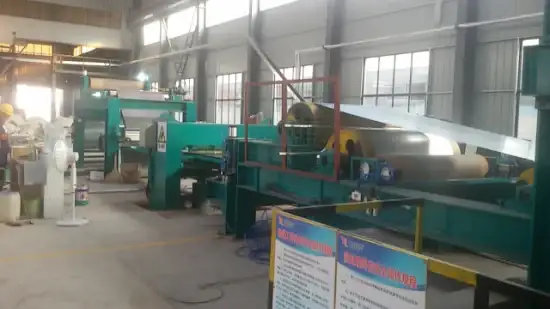 ## Growth Paths Built Into the Initial Design
Plants rarely stay the same size forever, and a well-planned coating line should not become obsolete the moment production ambitions grow. HiTo builds growth provisions into its designs where customers anticipate future expansion, whether that means space for an additional coating station, provisions for higher line speeds, or the ability to add monitoring and automation features later. Planning these possibilities during the initial project avoids the far more expensive exercise of retrofitting a line that was designed with no room to evolve. This forward thinking is particularly valuable for producers entering the market cautiously before scaling up.
Finding the Right Balance for Every Customer
The common thread across compact and high-capacity projects is that both require honest engineering judgment about trade-offs. Speed, footprint, capability, and cost cannot all be maximized simultaneously, and HiTo's role is to help customers find the balance that suits their actual business plan. Sometimes that means accepting a slightly longer line to gain quality advantages; sometimes it means prioritizing automation to offset a small crew. By approaching each project as a distinct engineering problem rather than a catalog selection, HiTo Engineering gives producers in very different circumstances access to coating lines genuinely built for their plants.