Sleep has become a strange battleground in modern life. We track it with rings and watches, obsess over eight-hour targets, and yet millions of people still lie awake at night wondering what they are doing wrong. Andrew Huberman’s approach cuts through the noise. He does not offer mystical sleep hacks or expensive gadgets. Instead, he breaks down the specific biological mechanisms that control sleep onset, depth, and recovery value. His protocols are practical, free or nearly free, and grounded in the actual neuroscience of how your brain transitions from wakefulness to rest. The central insight is simple but powerful: sleep is not something you try to do. It is something you allow to happen when you create the right conditions in your body and environment.
The Light Viewing Rule That Determines Your Sleep Quality
Most people think about light and sleep only at night, worrying about screens before bed. Huberman argues that morning light matters just as much, if not more. Your brain’s master clock, the suprachiasmatic nucleus, uses morning light exposure as its primary time stamp. When you view bright, low-solar-angle sunlight within the first thirty to sixty minutes after waking, you set a timer that will trigger melatonin release approximately fourteen to sixteen hours later. Skip that morning light, and your clock drifts, delaying melatonin and making it harder to fall asleep at your desired time. Huberman recommends ten to fifteen minutes of outdoor morning light on a clear day, twenty to thirty minutes on an overcast day. No sunglasses, no looking directly at the sun, and no windows—glass blocks the specific blue-violet wavelengths that set your clock. This single practice does more for sleep regularity than any supplement or app.
 ## The Temperature Drop That Triggers Sleep Onset
Here is a physiological fact that surprises most people. Your body temperature must drop by roughly one to three degrees Fahrenheit for you to fall asleep and stay asleep. This drop is not a side effect of sleep. It is a necessary cause. Your brain’s sleep centers are activated by cooling signals from your skin and core. Huberman recommends actively engineering this temperature drop by cooling your sleeping environment to between sixty-five and sixty-eight degrees Fahrenheit. If you cannot control the room temperature, take a warm bath or shower ninety minutes before bed. The warm water pulls blood to your skin, releasing heat from your core. When you get out, your core temperature drops sharply, signaling your brain that sleep should begin. Huberman notes that heated mattress pads or electric blankets used incorrectly can block this natural cooling. If you use them, turn them off before getting into bed so your body can release heat into the cooler environment.
The Non-Sleep Deep Rest Protocol for Afternoon Recovery
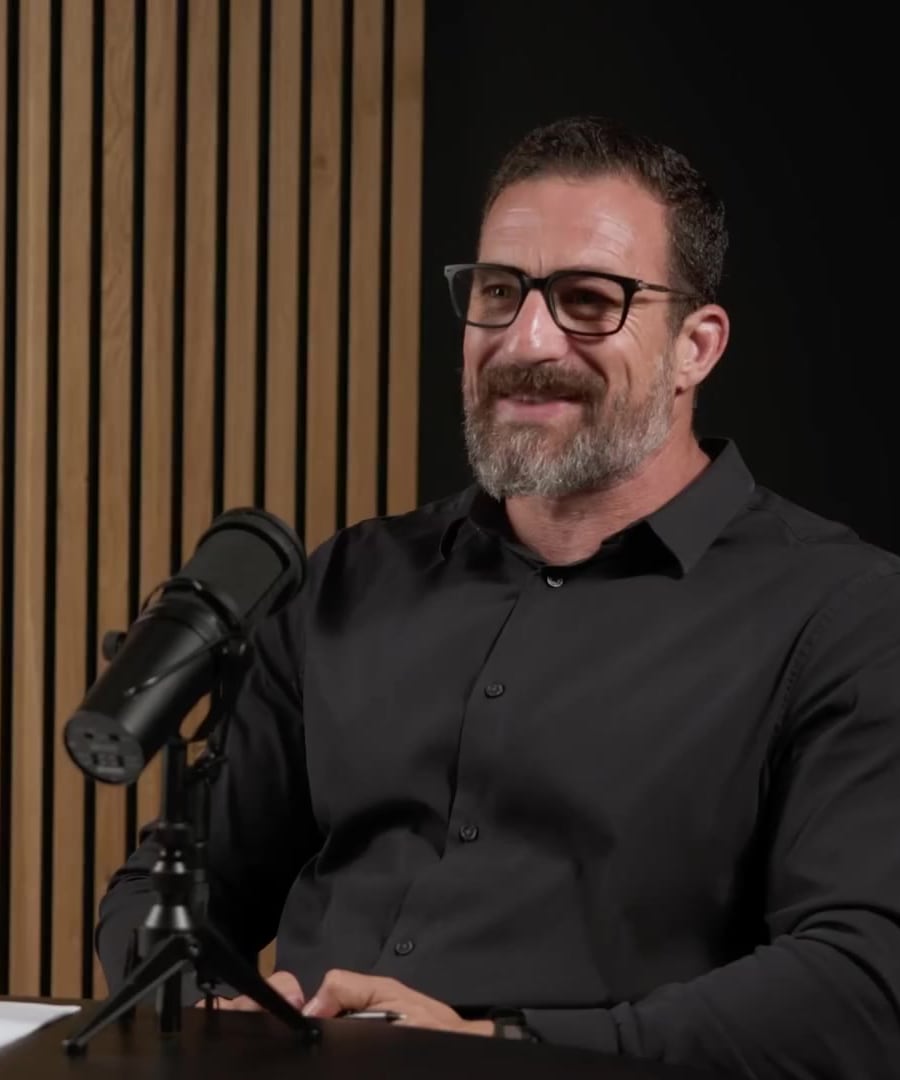
Not everyone can nap, and not everyone should. Andrew Huberman ↗ has popularized a technique called Non-Sleep Deep Rest, or NSDR, that provides many of the recovery benefits of sleep without actually losing consciousness. NSDR involves lying down in a comfortable position and systematically shifting your attention through different parts of your body for ten to twenty minutes, often guided by an audio recording. During NSDR, your brain waves slow toward theta range, your heart rate variability improves, and your body clears metabolic debris through the glymphatic system. Huberman recommends NSDR in the early afternoon, between one and four o’clock, when most people experience a natural dip in alertness. Unlike caffeine, which blocks adenosine and borrows energy from later, NSDR actually clears adenosine and restores your energy baseline. People who practice daily NSDR report falling asleep faster at night, likely because they have reduced the cumulative sleep pressure that builds during long waking hours.
The Caffeine Cutoff Rule Backed by Half-Life Math
Huberman is not anti-caffeine. He is a regular coffee drinker himself. But he emphasizes the math of caffeine’s half-life, which averages about five hours in most adults. This means that if you drink a cup of coffee at two in the afternoon, half of that caffeine is still circulating in your bloodstream at seven in the evening. A quarter remains at midnight. Caffeine works by blocking adenosine receptors, and adenosine is the molecule that builds sleep pressure throughout the day. When caffeine occupies those receptors, your brain cannot feel how tired it truly is. Huberman recommends a caffeine cutoff at least eight to ten hours before your intended bedtime. For someone who wants to sleep at ten o’clock, that means no caffeine after noon or one in the afternoon. He acknowledges that some people metabolize caffeine faster, but he advises erring on the side of an earlier cutoff. The goal is not to eliminate caffeine entirely but to ensure it is not actively fighting your sleep drive when you finally lie down.
The Alcohol Myth Most People Believe
This section may be uncomfortable, but Huberman presents the data clearly. Alcohol is not a sleep aid. It is a sedative. Sedation and sleep are biologically different states. Alcohol does help you fall asleep faster, but it fragments your sleep architecture in the second half of the night. Specifically, alcohol suppresses REM sleep, the stage most critical for emotional regulation and memory consolidation. It also relaxes your throat muscles, worsening sleep apnea and snoring. Even one or two drinks before bed, consumed within four hours of sleep, measurably reduces sleep quality. Huberman is not telling anyone to never drink. He is saying that if you wake up at three in the morning feeling wired after a night of drinking, that is not random insomnia. That is your body processing alcohol metabolites that act as stimulants while your REM sleep lies in ruins. The recovery protocol is simple but unpopular: stop drinking at least four hours before bed, ideally six, and notice how differently you feel the next morning.
 ## The Role of Eye Masks in Deep Sleep Maintenance
Light exposure during sleep is more disruptive than most people realize. Your eyelids are not light-tight. Red and blue wavelengths pass through closed lids and reach your retina, suppressing melatonin production even while you appear to be asleep. Streetlights, alarm clocks, phone notifications, and even the red glow of a power strip can degrade sleep quality. Huberman recommends a simple, low-cost solution: a well-fitted, opaque eye mask. The mask does not need to be expensive or high-tech. It just needs to block all light from reaching your eyes. In clinical studies, people wearing eye masks show higher melatonin levels throughout the night, more time in deep sleep, and better performance on cognitive tests the next morning. For shift workers or people in urban environments with unavoidable light pollution, an eye mask is arguably more effective than blackout curtains because it moves with you as you change sleeping positions.
Using Deliberate Waking as a Sleep Consolidation Tool
Finally, Huberman offers a counterintuitive protocol for people who wake up in the middle of the night and cannot fall back asleep. The instinct is to lie there, trying harder to sleep, which usually backfires by creating frustration and anxiety. Huberman recommends getting out of bed after about twenty minutes of wakefulness. Go to a dimly lit room, sit in a comfortable chair, and do something boring—reading a paper book, folding laundry, listening to calm music—until you feel sleepy again. Then return to bed. This practice, called stimulus control, retrains your brain to associate your bed only with sleep, not with tossing and turning. Over time, the middle-of-the-night waking episodes become shorter and less frequent. Huberman also suggests a physiological sigh or two before returning to bed, which lowers heart rate and shifts your nervous system toward calm. The key is patience. Your brain learned poor sleep associations over months or years. Retraining it takes weeks, not days, but the results are lasting and medication-free.