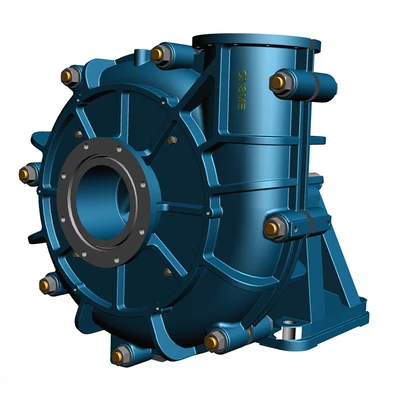
The aggregates industry runs on volume. Quarries and sand plants move thousands of tons of material every hour, and the difference between a profitable day and a loss often comes down to how smoothly that material flows through the processing circuit. Water mixed with crushed stone, sand, and gravel creates a slurry that is simultaneously the lifeblood and the biggest headache of any aggregate operation. Too much water and you waste energy and create disposal problems. Too little water and the slurry turns to paste that clogs everything in its path. CNSME PUMP heavy duty slurry pump ↗ have become the go to choice for aggregate producers who have learned that optimizing flow is not just about pump size. It is about pump design, material selection, and operating strategy working together to move the maximum tonnage with the minimum trouble.
Matching Pump Size to Production Targets
The most common mistake in aggregate pumping is selecting a pump that is either too small or too large for the actual production target. A pump that is too small runs at maximum speed constantly, wearing out quickly and struggling during surge conditions. A pump that is too large runs inefficiently at low speeds, wasting energy and allowing solids to settle in the volute. CNSME works with aggregate producers to size pumps based on realistic production targets, not theoretical maximums. They consider the peak tons per hour, the expected solids concentration range, and the distance the slurry must travel. The goal is a pump that operates at seventy five to eighty five percent of its maximum capability during normal conditions, with enough headroom to handle surges without overspeeding. Aggregate plants that have followed this sizing philosophy report that their CNSME pumps run cooler, last longer, and maintain consistent flow even when feed conditions vary.
 ## Controlling Velocity to Prevent Settling
Solids settle in pipelines when the slurry velocity drops below a critical threshold. Once settling starts, the pipe cross section reduces, velocity drops further, and a plug forms that can stop production for hours. Many aggregate plants run their pumps at unnecessarily high velocities to prevent settling, wasting energy and accelerating wear. CNSME pumps are designed to maintain effective solids suspension at lower velocities than standard pumps. The hydraulic profile creates a more uniform velocity distribution across the pipe cross section, eliminating low velocity zones near the pipe walls where settling begins. The impeller design produces a swirling action that keeps particles in suspension without requiring excessive flow velocity. Aggregate producers who have optimized their pipeline velocity with CNSME pumps typically operate at fifteen to twenty percent lower velocities than before, with no increase in settling incidents. Lower velocity means less energy consumption and slower wear on both the pump and the pipeline.
Managing Variable Feed Conditions
Aggregate processing is rarely steady. A crusher surge sends a wave of coarse material to the pump. A screen change alters the particle size distribution. A water supply fluctuation changes the slurry density. Standard pumps react poorly to these variations, losing prime, clogging, or surging. CNSME heavy duty slurry pumps handle variable feed conditions with remarkable stability. The wide internal passages accommodate temporary increases in particle size without jamming. The flat pump performance curve means that pressure does not spike wildly when density changes. The expeller seal tolerates temporary loss of suction without damage. Aggregate producers who have installed CNSME pumps report that they can feed the pump directly from the process without elaborate surge control systems. The pump simply handles whatever comes its way.
Reducing Recirculation Losses
Recirculation is the enemy of efficient flow. It happens when slurry leaks backward from the discharge side of the impeller to the suction side through the gap between the impeller and the wear plate. This internal leakage does no useful work but consumes power and accelerates wear. The recirculation gap in a standard pump might be twenty thousandths of an inch when new, but it quickly opens up as wear progresses. CNSME maintains tighter initial clearances and uses wear resistant materials that hold those clearances longer. The result is less recirculation, which means more of the pump’s power goes into moving slurry forward rather than churning it internally. Aggregate producers who have switched to CNSME pumps typically see a five to ten percent increase in flow at the same power consumption, purely from reduced recirculation losses. That is free capacity.
Adjusting Impeller Clearance for Peak Performance
One of the most powerful optimization tools on a CNSME pump is the adjustable impeller clearance. As the impeller and suction liner wear, the gap between them increases, allowing more recirculation and reducing flow. Many operators simply accept this efficiency loss until the next rebuild. CNSME makes it easy to restore proper clearance in minutes. A few turns of adjusting nuts moves the impeller closer to the suction liner, closing the gap back to the optimal setting. Aggregate producers who adjust their CNSME pump clearances monthly report that the pump maintains its original flow and efficiency throughout the wear life of the components. A pump that is optimized daily moves more tons per kilowatt hour than a pump that is allowed to degrade. The adjustment takes less time than a coffee break, but the cumulative impact on production is substantial.
 ## Selecting Impeller Styles for Particle Size
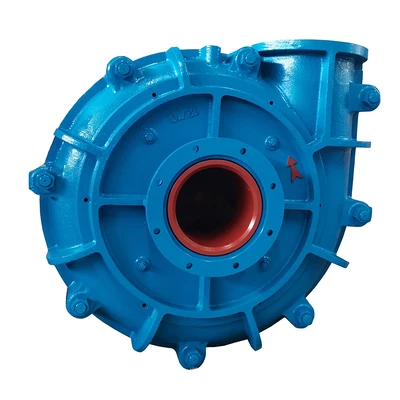
CNSME offers multiple impeller designs for aggregate applications, and choosing the right one makes a significant difference in flow optimization. For fine aggregates like concrete sand, a closed impeller with more vanes provides the highest efficiency and smoothest flow. For coarse aggregates with particles up to one inch, a semi open impeller with fewer vanes provides wider passages that prevent clogging. For applications with a wide range of particle sizes, a recessed impeller creates a vortex that draws slurry into the pump without particles ever touching the impeller vanes. Each impeller style has a different flow characteristic, and CNSME helps aggregate producers select the style that matches their specific material. The right impeller can increase flow by ten to fifteen percent compared to the wrong one, even on the same pump frame.
Minimizing Air Entrainment from Free Falls
Many aggregate plants feed slurry pumps from an elevated tank or screen deck, allowing the slurry to fall freely into the pump suction. This free fall entrains air bubbles in the slurry, which then enter the pump and reduce its capacity. A pump moving aerated slurry might deliver twenty percent less flow than the same pump moving deaerated slurry. CNSME engineers work with aggregate producers to design suction piping that minimizes air entrainment. A simple drop pipe that extends below the slurry surface, a deflector plate that directs flow gently into the sump, or a vortex breaker that prevents swirling can dramatically reduce air entrainment. These modifications cost little but deliver immediate flow improvements. Aggregate producers who have implemented CNSME’s suction piping recommendations typically see flow increases of fifteen to twenty percent without changing the pump or motor. That is the essence of optimization. Working smarter, not harder, to move more aggregate with the same equipment.